
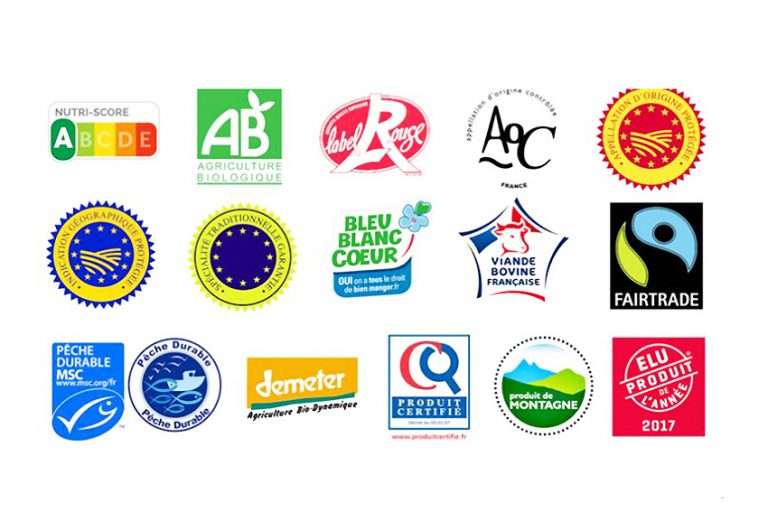
Faced with the numerous labels and designations in food, Greenpeace France, WWF France and UFC-Que Choisir denounce "large gaps between promises and reality".
Label Rouge, AOP, Bleu-Blanc-Cœur, HVE… The specifications of these products have been examined to see if they play their role as benchmarks for consumers, explain the consumer and environmental protection associations in a joint press release.
UFC-Que Choisir analyzed eight cheeses with protected designations of origin (PDO) and four meat sectors under the Label Rouge label. The result: entry-level production of Saint-Nectaire, Cantal, and Munster "shows very little difference from industrial production without PDO," the association believes. On the meat side, Label Rouge pork meets only "minimalist requirements," the consumer protection association maintains.
Organizations are campaigning to raise the bar. They are particularly targeting High Environmental Value (HVE): especially widespread in viticulture, this certification created by the Ministry of Agriculture is associated by its detractors with a label of "greenwashing" or facade greening.
Review the HVE reference framework
"There is a misuse of the term 'high'; it's a decoy," asserts Alain Bizot, president of UFC-Que Choisir. It is necessary to "suspend public support for HVE certification until the specifications have been revised" and "strengthen support for organic farming, which, unlike HVE, has proven itself," the associations maintain, while HVE farms will be eligible for the same premiums as organic farming under the future Common Agricultural Policy (CAP). However, the government has promised a revision of the HVE standard.
Another key issue is that the three actors want to "revise the approaches identified as 'sustainable' in the Egalim law," passed in 2018, so that socio-economic and environmental criteria (working conditions, impacts on the climate, biodiversity, etc.) are taken into account.
This law requires the collective catering sector—which provides 3,7 billion meals per year to school canteens, daycare centers, hospitals, nursing homes, and businesses—to serve 50% "quality and sustainable" products starting next year, including at least 20% organic (or in-conversion) products. Organic products accounted for 5,6% of canteen purchases by value in 2019.
With AFP.


