
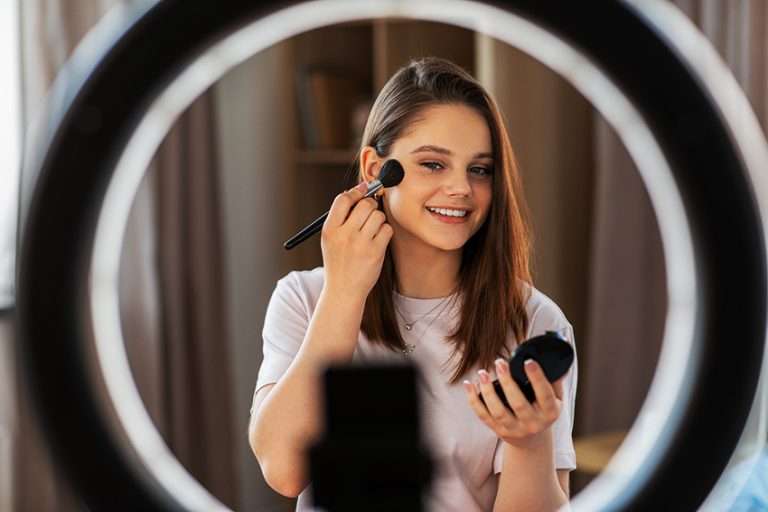
They're 10, 12, or 14 years old and are already filling their makeup bags with high-end skincare products. Anti-aging serums, hyaluronic acid creams, multi-step routines… Generation Alpha is passionate about beauty like no other before it. A boon for brands? Yes, but also a significant marketing challenge, according to Mintel.
The phenomenon has a name: the "Sephora Kids." A generation steeped in TikTok and Instagram, they're learning about skincare by imitating their favorite influencers. Through viral videos and ultra-polished tutorials, they adopt routines designed for adult skin, without always understanding the effects. The result: children are applying overly aggressive skincare products, designed to combat wrinkles they don't even have!
Behind the enthusiasm lies a reality the industry cannot ignore. By 2029, their purchasing power will reach approximately €5,5 billion, according to the research institute. But attracting this hyperconnected audience isn't just about selling them miniature creams. Expectations have changed.
No more appearance-centric discourse and anti-aging promises. Capturing Generation Alpha requires education, not patronizing. “The beauty industry has an important role to play in educating and guiding Generation Alpha, shifting the focus from appearance-centric messages, such as ‘fine lines’ and ‘wrinkle prevention,’ to promoting healthy skin habits,” says Mintel.
For brands, it will then be a matter of focusing on values that resonate: skin protection, hydration, or sun protection. Speak to them with content that is both fun and aspirational. Better yet, create an immersive and interactive experience where learning becomes a game.
Between hybrid shopping and technological immersion
“Generation Alpha is eager to learn and responds to both educational and entertainment needs, making it essential for brands to create engaging, age-appropriate content for the younger generation that will empower them to care for their skin with safe and effective skincare practices,” Mintel continues.
Brands that can meet this dual requirement—pleasure and education—will have a head start, warns the British institute. For others, the risk is clear: finding themselves disconnected from a clientele who, from a very young age, are already redefining the codes of beauty.
Native to omnichannel shopping, 12- to 14-year-olds juggle e-commerce and physical stores with disconcerting agility. In the United States, more than half of these teens shop online and then pick up their orders in-store. This is a generation that demands the best of both worlds: the speed of digital and the immediacy of the point of sale.
And the immersion doesn't stop there. Already, a third of 12- to 14-year-olds test their products via augmented reality before confirming their shopping cart, according to Mintel. Blind buying is no longer an option. L'Oréal has understood the challenge by offering 3D virtual try-ons: lipsticks, eyeshadows, complexion... Everything can be viewed in a few seconds, like an Instagram filter designed for shopping.
Behind these ultra-personalized experiences, artificial intelligence refines its recommendations. No more generic suggestions: each profile is scrutinized, analyzed, and anticipated… A tailor-made approach that redefines the relationship between brands and consumers.
READ ALSO: AI Trends: Towards Hyper-Personalized and Sustainable Beauty
A quest for authenticity and mental well-being
This new generation is growing up with one priority in mind: mental well-being. In the United States, six out of ten children aged 12 to 14 have been taught by their parents the importance of taking care of their mental health. A once taboo subject has become essential, driven by a youth who refuses to hide their emotions behind filters.
"This awareness is fostering a generation that is mindful of social causes, such as body positivity and self-expression, and more likely to challenge traditional beauty standards," notes Mintel. On TikTok, the "filter versus reality" movement is exploding, revealing the hidden side of unrealistic beauty standards.
A massive rejection of digital illusions is forcing brands to rethink their codes. Cult Beauty led the way in 2023 by banning retouched images in its campaigns, Mintel points out. But sincerity isn't enough. To capture this generation, we must also celebrate diversity. Inclusivity and naturalness are becoming the new pillars of loyalty.
An inclusive and gender-neutral vision of beauty
For Generation Alpha, beauty is no longer defined by gender, but by freedom of expression. Three-quarters of 12- to 14-year-olds in the United States are convinced: beauty products are made for everyone. A paradigm shift that's shaking up established codes.
Makeup is no longer reserved for one sex, and skincare is no longer gendered. This generation no longer wants to be pigeonholed. They see beauty as a space for experimentation, a way to assert their identity without constraints. Stereotypes? Outdated! Self-expression takes precedence over everything else.
Brands that embrace this shift don't just sell products; they also deliver a message. For example, the Unlabelled brand champions an inclusive vision that goes beyond mere marketing, with profits donated to mental health charities. To appeal to this generation, campaigns must also reflect the world's true diversity, with spokespeople who embody this new era.
READ ALSO: Inclusivity, a driver of growth for beauty brands
Generation Alpha allergic to greenwashing
Empty rhetoric and vague promises? They don't believe in them anymore. Generation Alpha wants something concrete, measurable, and real! Eight out of ten young Canadians, aged just 13, consider current efforts against climate change insufficient, according to another Mintel study. And they're not just saying it: they're acting with their wallets.
Their consumption is a commitment. Natural, organic products, free from controversial ingredients: their purchasing criteria are clear, and they don't hesitate to boycott brands that don't play by the rules. Greenwashing? Out of the question. They seek authenticity, challenge brands, and demand proof.
Parents are following suit. In the UK, seven out of ten parents prefer eco-friendly beauty products for their children, compared to barely half of previous generations, the institute points out. For brands, the time for vague labels and well-crafted slogans is over. Otherwise, this ultra-connected and well-informed generation won't hesitate to turn tail.


