
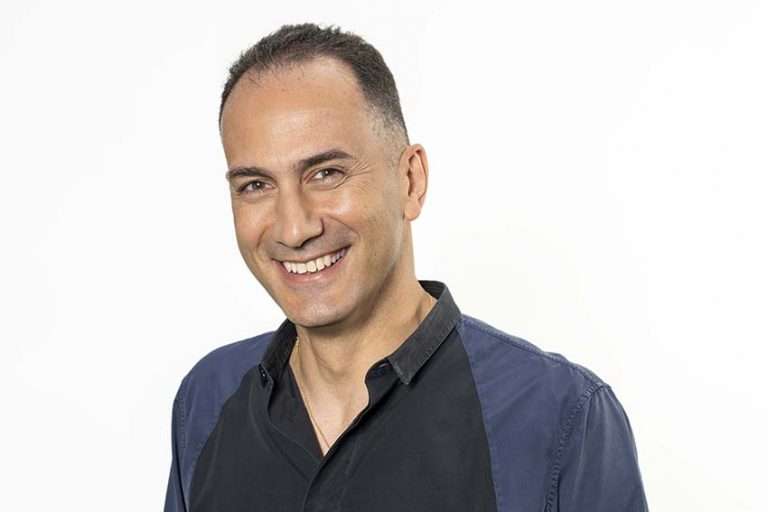
In eighteen months, Ieva Group CEO Jean-Michel Karam has consolidated his leadership position in this constantly growing market. In an exclusive interview with Profession Bien-être, he explains the reasons for this growth and why it's only just beginning.
Wellness Profession: You are an engineer by training and are more technology-oriented. How did you become interested in beauty?
Jean-Michel Karam: Quite by chance. In June 2002, I went to see a dermatologist about a mole and realized that there was no digital skin diagnostic tool available. That gave me the idea to design one. And to market it.
How was your initiative received?
I didn't know this market. So I was rather slow and first approached doctors. But the diagnostic tool was just an accessory; it wasn't enough for me. What I wanted was to offer personalized cosmetics, adapted to each skin type. An idea that has now been taken up by many brands, but at the time, no one was really interested in it. Initially, it was about helping practitioners better target their treatments. So I launched Ioma in 2010 and bought a laboratory in 2012 to manufacture the products.
What was the reaction?
Enthusiastic! It was an immediate success. So much so that Unilever bought the company in 2012. I remained at the helm of the company, but when I wanted to leave permanently in 2015, we reached an agreement: I would continue to manage it, but I could, at the same time, develop my own structure, Ieva Group.
Why this new business?
Because in 2016, the world of beauty had changed. It had acquired a significant wellness dimension. And above all, professionals were finally becoming aware of the influence of environmental stress and pollution on the skin. We were able to conduct a study on twins who had lived differently. At the age of 65, some skins, although genetically identical at the start, showed a difference in appearance of fifteen years! We were therefore able to take personalization even further.
And the creation of Ieva corresponded to my desire to further marry beauty and digital technology. Because we must take into account a profound generational shift. Whereas our parents, and even my generation, prioritized possession and ownership, younger people prefer to have access to things without owning them. Internet service providers, cell phones, cars, software: today, we can benefit from a multitude of advantages with monthly fees.
This is the very principle of Ieva. It involves a subscription to an app powered by artificial intelligence and accompanied by dermatological patches. This allows for precise recommendations. Three days after the diagnosis, the subscriber receives their box with their selection, whether it be a cosmetic, hair, or makeup product. Three months later, they receive a connected piece of jewelry, which allows them to measure ambient pollution.
So how do we move from all-digital to the aesthetics of the gaze?
In fact, I was looking for a point of sale to promote the app. That's when the opportunity to buy Atelier du Sourcil presented itself. Another business I knew little about! But meeting Joss Devilleneuve, the founder, was an eye-opener. While salons were lacking clients and struggling to maintain their business, the main concern of these boutiques was managing to fit clients into their schedules.
What do you attribute this attractiveness to?
When you meet someone, you instinctively look at their eyes. The eye area captures 80% of a person's attention. It's also a fragile area, indicative of aging, hence the constant sales of eye creams. With her experience as a makeup artist, Joss revealed to her clients the importance of the brow line, which can close the eyes or, conversely, open them up.
And it's a cost-effective, fast service with immediate results. A successful eye treatment boosts the client's self-confidence. This is an important factor in customer loyalty, since these services lead to repeat business.
A year after purchasing the sector's number one, you acquired number two, Boudoir du Regard. Are you considering merging them into a single network?
No, because the two entities have their own identities. L'Atelier du Sourcil has a more artistic dimension and focuses on facial morphology. It's a very accomplished concept, whose values I share, and I really wanted to develop it internationally, which is already off to a good start with Italy, Belgium, and Luxembourg. With its turnover of 35 million euros, all hope is allowed!
Le Boudoir du Regard is a smaller company, with a turnover of €5 million and a vision that focuses more on technology than on art. Their common thread is that they offer the Ieva experience, our unique blend of digital and cosmetics, at every point of sale.
Why is the aesthetics of the gaze so successful?
First, because it's always more rewarding to call on an expert than a general practitioner. In a general salon, the beautician must perform a multitude of treatments, many of which aren't really profitable. How can she compete with a practitioner who only deals with the eyes? Between someone who does only that, ten times a day all year round, and someone else, only once or twice a month, who will you choose to take care of your eyebrows?
The problem remains training for what is not yet a profession in its own right...
In our group, all our practitioners have a CAP (Certificate of Professional Aesthetics) or a BP (Certificate of Professional Excellence), which avoids this problem. In addition, we train them for three months in our techniques. It's a significant investment, but it allows us to guarantee the same quality of service in all our centers.
It's true that today, the only requirement to set up shop is to have completed a two-day hygiene and sanitation course at an approved center, just like for tattoo artists. And the authorities are quite vigilant. In the event of non-compliance, the establishment can be immediately closed. But, of course, that's not enough. That's why we created a "College for Eye Beautification," led by the founder of the Atelier du Sourcil.
So you think this sector will continue and grow?
Yes, because it's anything but a passing fad! We can expect more oversight and more control, as with pigments, with new standards coming into effect in 2022, but it's impossible to stop the expansion of specialized centers.
Interview by Siska von Saxenburg.


